
Anúncios
You’ll soon see that long gym sessions are not the only path to real change. Short, focused minutes done often will shape how your body moves and how your brain learns.
Fifteen minutes a day of clear practice makes new habits stick. Your nervous system favors what you repeat, so small sessions plus simple feedback compound into real gains.
This approach cuts friction. It protects tissues by using recoverable loads and limits soreness. It also helps people avoid the common burnout from one huge workout.
Your goal will shift from chasing perfect plans to building a practice you can keep through busy weeks. With coaching and short, repeatable moves, you’ll create lasting change over time.
Why Small Daily Actions Beat Sporadic Big Workouts
Small, regular actions stack up faster than rare, all-out workouts. Short daily efforts lower the discipline barrier and make skipped days less common. When you do a brief session each day, you protect yourself from long soreness and lost momentum.
Anúncios
Your brain learns from repetition, not intensity. Fifteen focused minutes once a day can outpace a single long session repeated once a week. Small actions trigger dopamine hits that make starting easier the next time.
“The best workout is the one you actually do.”
Benefits at a glance:
Anúncios
- You’ll trade the roller coaster of a single “killer” workout for daily actions your brain can repeat without heavy resistance.
- Short sessions fit busy time windows and keep your goals moving forward without derailing a week.
- Small wins release feel-good signals that reduce friction and make the next start simpler.
- By anchoring one brief movement block each day, you’re never more than 24 hours from progress toward your habit.
Make the shift from one-off change to steady practice. Over weeks, these actions add up into real gains and lasting habits.
The Science: How Your Brain and Body Adapt to Minutes Done Often
Brief daily practice nudges your brain to favor cleaner movement patterns. Repetition trains neural circuits so the moves you repeat become automatic. That wiring is the engine behind lasting change.
Neuroplasticity 101
Your brain updates based on what it sees most. When you do a short session each day, those signals strengthen pathways for smoother, safer movement.
Motor learning research
Research shows spaced, frequent practice beats rare long workouts for retention. Ten to fifteen focused minutes repeatedly gives your nervous system the right exposure to keep skills.
Tissue adaptation
Your body rebuilds with recoverable load. Small, regular stress invites remodeling without the irritation that comes from big, infrequent overloads.
Consistency over intensity
One short session at the right time compounds across days and weeks. If you can recover and repeat it tomorrow, you’re creating durable change that lasts.
“If the work can be repeated tomorrow, it’s moving you forward.”
- You’ll learn how the brain keeps what you repeat.
- Minutes matter: 10–15 focused minutes strengthen neural pathways.
- Daily recoverable load builds resilient muscles and joints.
Your How-To System for Consistency: Build a Habit Framework That Sticks
A reliable system reduces guesswork and makes showing up automatic. Map a simple weekly plan so your Human brain knows which workout belongs on which days. That structure removes decision fatigue and keeps your week predictable.
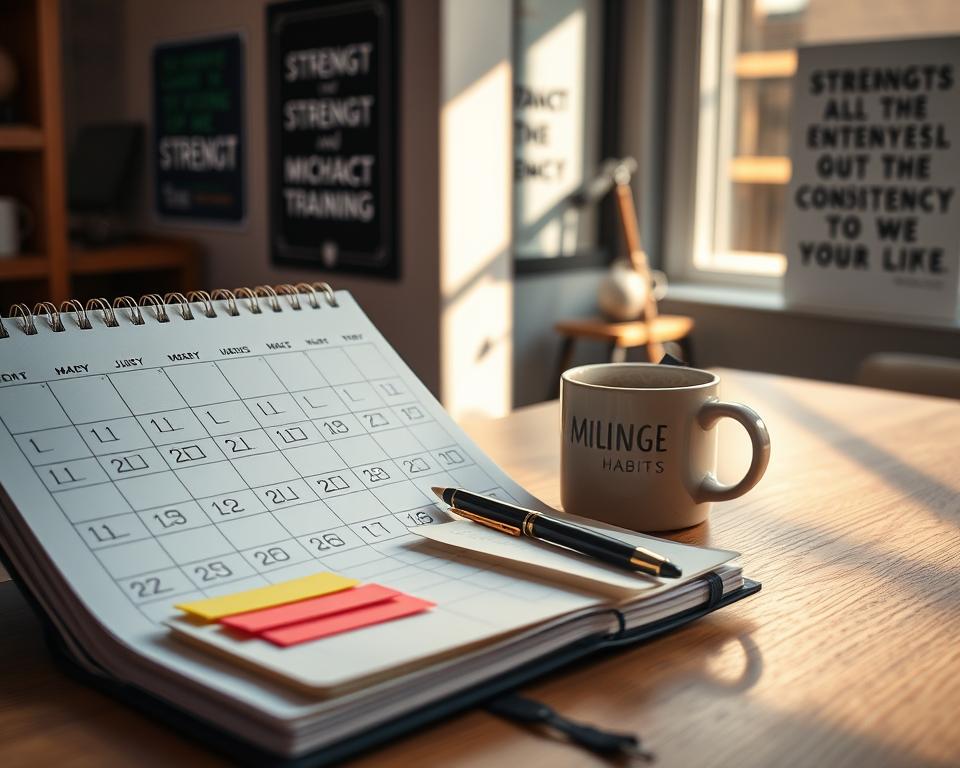
Map your week
Assign movement types to specific days. You’ll trade uncertainty for a clear pattern that your brain can follow.
Engage your “Chimp”
Make sessions fun and rewarding. Play music, pick a scenic route, or attach meaning to each session so your emotions push you toward the work instead of away from it.
Design your environment
Stage gear the night before, set morning cues, and lower resistance to start. Small environment tweaks cut friction and save precious time.
- Set micro goals by minutes (2–15) so wins stack quickly.
- Include 1–2 easy days weekly and a deload every 3–4 weeks for longevity.
- Stack habits onto anchors like coffee, commute, or lunch.
“Define one goal for the week and one for the day; use tiny actions to move both forward.”
Light coaching—quick feedback or form checks—keeps quality high without long sessions. This simple framework helps your habits stick through real life and real work.
micro training consistency in Practice: Sample Routines You Can Start This Week
Start this week with tiny, reliable routines that fit your day and move the needle. Below are simple, repeatable blocks you can do in the gaps of your schedule. Each one is built to nudge your brain and body toward steady progress.
Two-minute starters
Begin with a short primer. Do 30–60 seconds of nasal breathing, then 30–60 seconds of spine and hip mobility. Finish with light activation to beat resistance and make the next block easier.
Five-to-fifteen minute strength blocks
Rotate daily emphasis: push, pull, hinge, squat, carry. Keep one block equipment-light so you never skip a workout when travel or meetings pop up.
Running and cardio micro-sessions
Stack short runs into your commute by jogging to or from work. Vary routes and use a weekly run structure—speed Tuesday, tempo Saturday, long Sunday—while keeping recovery in mind.
Workday “movement snacks”
Every 60–90 minutes, take a two-minute break: posture resets, calf raises, wall slides, or quick stair walks. These actions add real volume over a week.
Morning vs. evening sessions
If mornings are chaotic, pick a short evening slot. If evenings are unpredictable, reserve a morning window. Choose the time you’ll repeat most often and stick to it.
- Tip: Aim for minutes that match your day—two minutes to keep the streak alive; 10–15 minutes to push strength.
- Track one small metric—minutes or blocks completed—so your brain sees steady wins.
- Blend feel-good elements (music, fresh air, a friend) with work that builds tomorrow (tempo, carries).
“If the work can be repeated tomorrow, it’s moving you forward.”
Want more sample plans? See a practical guide on micro-workouts to build fitness for easy routines you can slot into any week.
From Practice to Progress: Coaching, Feedback, and Getting Back on Track
When you add focused feedback, small actions stop being busywork and start driving real change. A coach gives you the outside view that prevents repeating minor errors and speeds improvements.
Close the loop: Practice, feedback, application, repetition
Use a simple loop: do the work, get feedback, apply the fix, repeat. That cycle turns 10–15 minute sessions into measurable changes.
Quick video checks or live cues let you correct form fast so your brain learns the better pattern.
Restart protocol after a break: Make it easy, then scale gradually
After time off, set tiny goals and stack the first workout after coffee or your commute. Start easy and add 5–10 minutes to one or two workouts each week.
Measure what matters: Track days practiced, not just performance
Count days practiced first. Once that habit is steady, layer in weights, reps, and pace. Research shows frequent spacing beats rare overloads for long-term retention.
- Coaching helps spot blind spots and give simple progressions.
- Keep one session per week technical to groove movement without fatigue.
- Capture quick clips or get live feedback to close the loop fast.
For a practical view on how coaching improves adherence, see coaching for adherence. With a clear goal and steady days, small changes compound into lasting habits.
Conclusion
Start small today: pick one tiny habit and commit a few minutes to it. Short, repeatable actions reshape your brain and steadily strengthen your body.
Use a simple system: practice, get quick feedback, apply a tweak, and repeat. That loop turns brief work into durable change and keeps friction low in busy life.
Measure days practiced, protect recovery, and treat any setback as a restart cue. Anchor sessions to coffee, commute, or lunch so you show up on the days that matter most.
Make the challenge small, act now, and scale slowly. Your consistency will become your edge—one short action at a time.