Anúncios
Can gentle cardio really build fitness without wrecking your joints? You might expect intense workouts to be the only way to boost heart health and manage weight, but there’s a gentler path that still delivers results.
Cardio that’s easy on your joints can still be highly effective. The American Heart Association suggests at least 150 minutes of moderate cardio each week, and simple options like walking, cycling, swimming, and rowing raise your heart rate without hard landings.
In this article you’ll find practical, plug‑and‑play 20‑minute workouts and joint‑friendly variations for your arms and legs. You’ll learn how to keep intensity up while protecting your body.
Espere etapas claras for warm‑ups, cool‑downs, and scalable training so you can turn spare minutes into consistent, safe workouts anywhere — at home, on the road, or outdoors.
Why low-impact cardio works for your heart, joints, and overall health
You can strengthen your heart and lungs with steady, joint-friendly cardio that fits any schedule. Gentle training raises your heart rate and challenges your lungs while limiting stress on weight-bearing joints.
Anúncios
The benefits are real: regular moderate exercise helps manage weight, lower blood pressure, and improve cholesterol. The American Heart Association recommends at least 150 minutes of moderate cardio each week to support long-term health.
- Aim for an RPE of 11–14 so you feel warmer and slightly breathless but can still speak in full sentences.
- You can hit that effort with walking, swimming, cycling, or simple home drills that keep your arms and muscles active.
- Short bouts, even measured in seconds, add up and make steady fitness gains without extra joint risk.
Listen to your body: slow down or reduce range if exercise feels too hard. If you experience chest pain, dizziness, or palpitations, stop and contact your doctor before resuming training.
For more practical guidance on safe sessions, read this low-impact cardio recurso.
Anúncios
Low impact movement ideas
You don’t need to pound the pavement to raise your heart rate and build lasting fitness. Simple options let you train without adding strain to your knees, hips, or feet.
Walking and hiking reduce joint strain compared with running and can be intensified with hills for a bigger heart rate boost.
Cycling—indoors or outside—keeps your feet off the ground, so your joints take less pressure while your leg strength and cardio improve.
Swimming and water workouts use buoyancy to almost eliminate joint stress. They’re ideal if you have arthritis, fibromyalgia, or limited mobility.
- Rowing gives full‑body, seated training that works your back, core, and legs with less joint pounding.
- Elliptical machines glide so you burn calories without hard foot strikes on the ground.
- Vertical climbers let you push intensity in a rhythmic pattern that’s gentle on joints but tough on cardio.
- TRX and suspension training unload joints during strength moves while improving stability and side‑to‑side control.
- Rollerblading tones legs with flowing motion and minimal jarring—plus it’s a fun way to mix up training.
If joint risk concerns you, start with gentler modalities and track your heart rate and RPE as you progress. For more practical guidance on safe sessions, see low-impact workouts.
At‑home low‑impact workout ideas you can do in small spaces
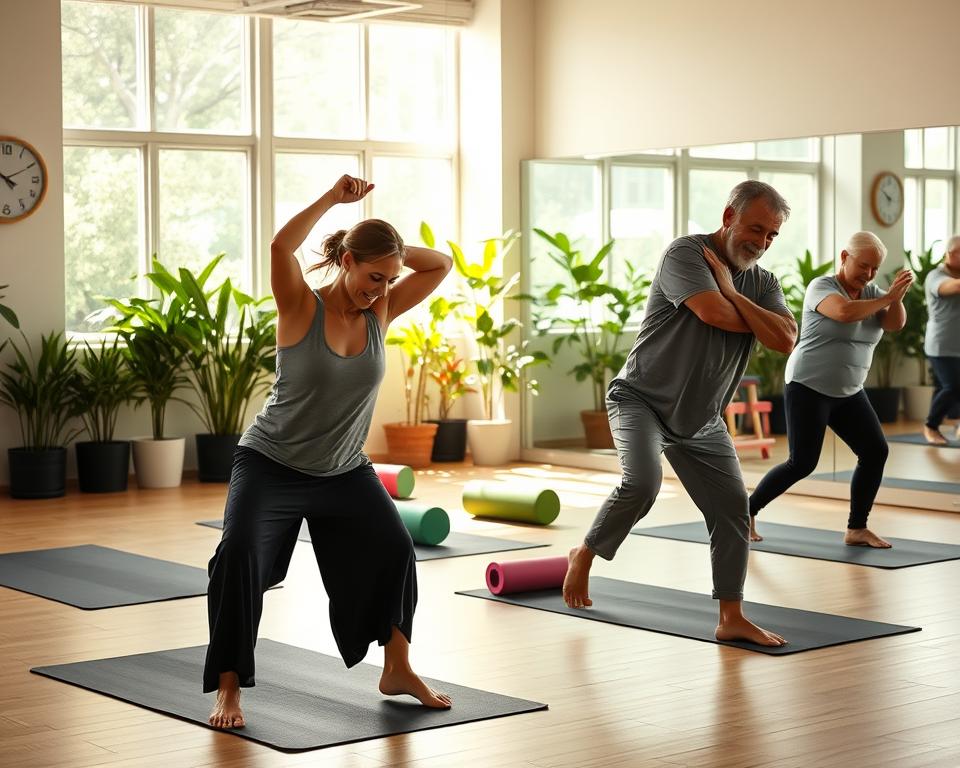
You can train your whole body in a small spot with smart, joint‑friendly moves. These exercises require little room and avoid jumps so your feet and knees stay protected.
Low‑impact jumping jacks
Step one foot out at a time while raising arms overhead. Exaggerate arm swings to raise heart rate and burn more calories without leaving the ground.
Speed skaters (no jump)
Alternate curtsy lunges side to side. Focus on control and position to strengthen hips and the side of your body without pressure on the foot.
Squat to jab
Squat deep, stand tall, then punch across your chest. This pairs legs and arms for total‑body training and higher calorie burn.
- Standing oblique crunch: bring elbow to knee for core work while upright.
- Lateral shuffle: move quick side to side to train stability and hips.
- Reverse‑lunge to front kick: step back, then kick forward; switch sides at 30 seconds.
Short options to round out a session
Try V‑steps, speed‑ball arms with marching, towel slams, ball throw and catch, or seated star jumps to add variety and keep training fresh.
Your 20‑minute low‑impact cardio circuit to do anywhere
A quick, structured 20-minute circuit can raise your heart rate and fit into any busy day. Use this plan when you have limited time but still want effective training for strength and cardiovascular fitness. The format is simple: warm up, six one‑minute exercises, a short rest, then repeat up to three times.
Warm-up
Warm up for 1 minute with marching on the spot, side taps while raising arms, and knee raises with opposite-hand taps. Move smoothly to prepare your feet, hips, and arms for the session.
The circuit
Perform each exercise for 60 seconds, back‑to‑back:
- Low‑impact jumping jacks
- Skaters (no jump)
- Squat to jab
- Standing oblique crunch
- Lateral shuffle
- Reverse‑lunge to front kick (30 seconds per leg)
Rest and repeat
Take 1 minute of rest after the six exercises, then repeat up to three rounds to complete the 20‑minute workout. If a full minute feels long, insert short breaks and build time as your training improves.
Cool‑down
Finish with ankle rolls (8–12 each direction), spinal rotations (8–12 each side), and side‑body stretches (hold 8–12 seconds per side). These small steps help you recover and keep your joints happy.
How hard should you work? Intensity, heart rate, and RPE
Finding the right effort level helps you train safely while still improving your fitness.
Use the Borg RPE to steer your session. The scale runs from 6 (very, very light) to 20 (very, very hard). Aim for 11–14 for moderate intensity: you feel warmer, breathe deeper, and can speak in short sentences.
Use the RPE scale
Keep intensity in the moderate zone. If a set spikes above that, shorten range, slow your pace, or take a brief break. That lets you keep training without adding joint stress.
Target heart rate and time
The American Heart Association recommends about 150 minutes per week of moderate cardio. Build minutes across days to reach that time. Heart rate monitors help, but perceived rate is a reliable guide for everyday sessions.
Ouça seu corpo
- If breathlessness stops you from talking, back off and return to moderate intensity.
- Alternate patterns side to side so one area doesn’t fatigue too fast.
- Any chest pain, dizziness, or palpitations is a hard stop—pause and contact your doctor.
Progression that protects your joints while building strength and cardio
Small, steady progressions let you raise effort without stressing fragile joints. Start with tiny changes and test how your body responds before adding more time or weight.

Adjust variables: add seconds, rounds, light dumbbells, or incline
You can extend each exercise by 10–30 seconds, add an extra round, or hold light dumbbells for moves like squat to jab. These tweaks help you build muscle and add strength without harder landings.
If your knees or hips feel pressure, shorten range, change your position, or slow the pace. Stop any drill that causes sharp pain.
Weekly plan: 2–3 focused sessions plus active rest days
Aim for two to three focused cardio sessions each week. Add easy walks, mobility work, or gentle strength days between sessions to keep recovery going.
- Progress by adding seconds, another round, or light weights—small steps beat big jumps.
- Keep joint comfort first; ease off if you feel pressure in a knee, hip, or leg.
- Mix one interval session with one steady session for balanced training.
- Track times and loads so you can nudge progression gradually and safely.
- If one side is weaker, split sets evenly to avoid compensations and build balanced strength.
Lembrar: quality and consistency matter more than sudden increases. Adjust regularly and prioritize form so your workouts protect joints while improving fitness.
Form, footwear, and modifications: trainer‑approved tips for happy knees and hips
Small setup changes—how you stand, brace, and step—cut joint stress and keep workouts effective. Use these cues so your knees and hips feel safer and your sessions last longer.
Technique first: knee tracking, core engagement, and stable foot position
Keep your knee tracking over your toes and avoid collapsing inward. A stable foot position and an engaged core protect your back, hips, and knees during every rep.
Right gear: supportive shoes, cushioned surfaces, and water options
Choose supportive shoes and, when possible, a cushioned surface to reduce impact on your feet and joints without changing the exercise pattern.
Water workouts give near zero‑impact training when your legs or feet need a break.
Custom options: seated moves, smaller ranges of motion, and side‑to‑side swaps
Scale range of motion first—smaller steps or shallower squats—before changing the move. If a knee or hip flares, adjust your foot angle or stance width; tiny position shifts often help a lot.
- Engage your core before you move your arms or legs so reps stay organized.
- Hold a wall for balance on single‑leg patterns and step‑backs.
- Follow a trainer’s cue: move well, then move more—quality beats speed when protecting joints.
Low‑impact cardio in the real world: ways to stay consistent anytime
You can reclaim minutes in your day by stacking brief, purposeful workouts that add up fast. Aim to build toward 10 minutes of continuous aerobic time over weeks if you’re starting out.
Micro‑workouts: sprinkle 5‑ to 10‑minute sessions through your day
Use 5‑ to 10‑minute sessions to turn spare moments into real progress. Short bouts like marching, V‑steps, towel slams, and speed‑ball arms work your body and keep your heart engaged.
- Stack short sessions: do two or three mini workouts at different times to add meaningful minutes by day’s end.
- Mix movements: alternate a minute of towel slams, a minute of marching, then a minute of lateral steps to keep calories burning.
- Keep cues simple: use calendar alerts or pair sessions with coffee breaks so exercise fits your routine.
- Desk‑friendly options: stand and march or do seated speed‑ball arms to mobilize and refresh without leaving work.
Focus on quality reps over quantity. Track your times each week, celebrate small wins, and add another short workout when you can to protect weight and boost fitness.
Conclusão
A simple, repeatable 20-minute circuit can change your fitness within weeks when you stick with it, and it’s a practical way to train your heart and build strength without harsh landings.
You’ll see real benefits in endurance, weight control, and muscle tone across your legs, arms, and core when you combine circuit training with walking, cycling, swimming, or rowing. These low impact options let you push cardio intensity while protecting your joints.
Progress slowly: add light dumbbells, extend seconds per set, or increase rounds as your training improves. If something hurts, pause and take rest. Keep the focus on form and consistency, and this gentle approach will repay you with lasting fitness and confidence.