Anúncios
Modern digital programs stretch your care beyond the exam room. You’ll see how chronic monitoring tech streams real-time patient data to your team between visits. That constant flow helps you spot early warning signs and act sooner.
Com remote patient monitoring you can capture daily vitals and keep patients connected to providers. Real-world programs show fewer hospital visits, lower costs, and higher adherence when these services are used at scale.
You’ll learn practical benefits for both providers and patients. The right solution fits your workflow, adds clear reporting, and scales across service lines without replacing your care model.
When you evaluate options, look for strong data integration, EHR connectivity, and easy device logistics. For deeper guidance on program features and outcomes, review this resource on chronic care management software.
What chronic monitoring tech is and how it supports your care delivery today
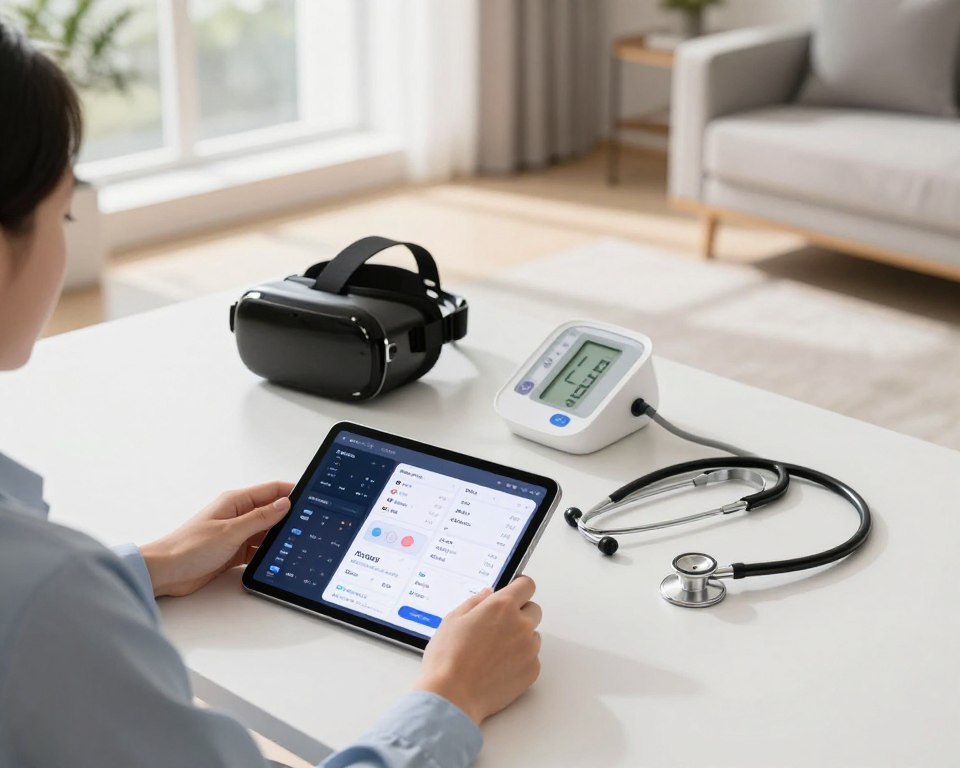
Home-collected vitals give your staff a continuous view of patient health outside the clinic.
Anúncios
Como funciona: remote patient monitoring links devices in patients’ homes to a secure platform so your team reviews daily readings between visits. Common measures include blood pressure, blood glucose, and weight.
Your devices and daily workflows
Rules convert real-time readings into actionable alerts when thresholds are crossed. That lets you adjust treatment quickly and prevent deterioration.
Who benefits
Providers and staff get prioritized alerts and clear routing. Patients feel supported and report better adherence when they capture vitals most days each month—typically at least 16 days per month.
Anúncios
From capture to care
- Daily vitals create longitudinal data that reveal trends.
- Alerts reduce emergency visits and shorten hospital stays for common diseases.
- Teams configure thresholds per condition so providers aren’t overwhelmed.
For evidence on outcomes and program design, see this review on remote care outcomes: remote patient monitoring evidence.
Chronic monitoring tech: the platform, people, and processes behind better outcomes
A combined platform, skilled clinicians, and clear processes are what turn remote data into real, timely interventions.
Multidisciplinary, APP-led teams expand access while freeing your clinic staff to focus on in-person visits. Advanced practice providers handle most virtual encounters, with only about 0.2% needing escalation to physicians.
This model boosts scheduling flexibility and broadens access for rural or transportation-limited patients. Your care team can deliver guideline-based actions and still preserve individualized judgment.
State-of-the-art integration and workflows
Modern solutions push vitals and notes straight into the EHR, cut manual documentation, and automate billing. Role-based routing sends alerts to the right team member so follow-up is timely and predictable.
- You’ll see how APP-led staff manage most tasks, freeing clinic personnel for face-to-face care.
- Automation—from device setup to billing—lets the program scale without extra headcount.
- Secure data flows into your system of record, simplifying audits and handoffs.
Por que isso é importante: consistent engagement and integrated services help your provider team decide when to reassure a patient virtually and when to bring them in for an exam. That mix preserves continuity, improves decisions, and speeds time-to-value for your program.
Proven results that matter to your program, patients, and bottom line
Real program data show measurable gains across costs, engagement, and clinical outcomes.
Cost and utilization: Programs report a 50% drop in total cost of care for hypertension and lower Medicare spend overall. You’ll also see fewer hospital stays and reduced readmissions, which directly improves financial performance.
Engagement and adherence: About 84% of enrolled patients capture vitals at least 16 days per month. That steady input drives trend visibility and correlates with a 3.2x increase in guideline-directed therapy adherence.
Operational efficiency: Systems have logged 1.5 million minutes of patient interaction — roughly 4,800 minutes per day — with only 0.2% of virtual encounters escalating to physicians. This preserves physician time for high-acuity needs.
Patient experience: Ninety-seven percent of patients report feeling more connected and supported by their providers. Better engagement ties directly to fewer acute episodes for heart and other conditions.

- You can point to concrete outcomes: cost reductions, lower Medicare spend, and fewer hospital visits.
- Consistent monitoring helps reduce variability in care and improves outcomes across cohorts.
- These metrics let you build a clear business case that links patient experience to sustainable financial gains.
Clinical use cases: hypertension, diabetes, heart failure, and beyond
Picking the right device for each patient turns data into timely clinical action. You match tools to risks so readings become clear signals, not noise.
Right device, right metric: blood pressure, blood glucose, weight, and trend insights
Blood pressure cuffs are the primary tool for hypertension and stroke or kidney risk. Glucometers capture blood glucose for diabetes care. Digital scales track weight changes that often signal heart failure worsening.
Trend data—not single readings—drive treatment changes that stabilize disease progression. Standardized schedules and personalized thresholds keep your team consistent while honoring individual needs.
- Match device to condition: cuffs for blood pressure, glucometers for diabetes, scales for heart failure.
- Educate patients: show when and how to take accurate blood pressure and glucose readings to ensure reliable data.
- Integrate care: weekly trend reviews enable diet counseling, medication titration, and layered peripherals for complex multimorbidity.
- Operationalize alerts: route follow-up to the right clinician with clear guidance to reduce unnecessary visits and acute episodes.
- Translate data: turn device readings into simple insights that keep patients engaged over the long term.
Remote patient monitoring has shown cost-effectiveness in cardiac services like hypertension and heart failure, reducing ED visits, shorter hospital stays, and fewer readmissions. Use these use cases to shape practical workflows that improve outcomes for people with chronic diseases.
Why choose our remote patient monitoring solution for chronic care management
Pick a partner that connects devices, workflows, and clinicians so your team focuses on care, not paperwork.
End-to-end integration: our remote patient monitoring pushes vitals into EHR flow sheets, automates documentation and billing, and accelerates time to value.
Experienced care model: an APP-led care team expands access for hard-to-reach patients and protects provider and staff capacity. This model helps close gaps and improve adherence.
- You get workflows built for management that drive consistent follow-up and measurable outcomes.
- Programs align to cardiac and metabolic disease needs with clear escalation rules and efficient treatment decisions.
- Hardened security, proven operations, and reporting tie activities to reduced hospital use and lower costs.
- Patient-friendly onboarding and ongoing support keep patients engaged and preserve clinician time.
Resumidamente: you gain services that scale access across locations while protecting your staff and improving health outcomes.
Conclusão
You now have a clear roadmap to bring remote patient services into daily care. Use simple daily readings and threshold-driven outreach so your team gets reliable dados in time to act.
With integrated workflows and multidisciplinary staff, patient monitoring e remote monitoring reduce emergency visits, readmissions, and hospital time. You’ll strengthen medication adherence and improve outcomes for heart, hypertension, and other diseases while lowering costs.
Choose a partner that fits your systems and needs. That step helps your providers focus their time, helps patients stay on track between visits, and scales meaningful chronic care improvements across your population.