Duyurular
Can simple tools at home change how people get care between visits? This practical guide shows how connected remote treatment uses wearables and in-home monitors to help patients and providers in the United States today.
This section outlines the what Ve how: telehealth plus remote patient monitoring, workflows, dashboards, alerts, and easy at-home setup. It highlights key device categories like blood pressure cuffs, heart monitors, temperature tools, pulse oximeters, weight scales, and activity trackers.
Continuous tracking and trend reports let clinicians act on changes faster, improving health decisions between visits. Modern care often blends video visits, app-based education, and messaging so patients feel supported at home.
The goal is clear: turn home data into timely decisions that boost outcomes and satisfaction, while keeping in-person visits when they are needed. Readers will learn practical steps and real-world uses of these devices and the technology behind them.
What Connected Remote Treatment Means in Modern Healthcare
Care at home now blends scheduled video visits with continuous device reporting to give clinicians a clearer view of health between appointments.
Duyurular
Devices, visits, and ongoing monitoring working together
Tele sağlık visits set the plan and goals. Then devices at home send steady readings that support follow-up care.
Synchronous care refers to live video or phone visits. Asynchronous monitoring comes from device readings and app check-ins that fill gaps between visits.
Why “always-on” data matters
Day-to-day patient monitoring captures variability that a single office reading misses. That fuller picture helps a provider spot early signs of decline.
Duyurular
- Patient uses a device at home.
- Device data flows to an app or cloud for trend reporting.
- Clinicians review trends during or between visits and adjust care as needed.
Remote patient monitoring programs should strengthen the relationship between clinician and remote patient, not replace human judgment. Using RPM and telemedicine together helps providers act sooner and keep patients safer.
Why Providers and Patients Are Shifting Care to the Home
Bringing visits into the home frees patients from long trips and lets clinicians focus on timely, practical support.
Better access for rural areas and busy schedules
Access to specialty care is a big barrier in rural regions. Telehealth bridges distance, helps overcome transportation limits, and improves follow-through for patients who must travel far.
Less travel time while maintaining meaningful provider support
Reduced travel zaman means more completed visits and fewer delayed concerns. Patients who juggle work and caregiving can keep a care plan without losing a day at the office.
Keeping patients out of crowded settings when appropriate
Home care helps keep less severe cases out of hospitals and clinics, preserving capacity for sicker patients.
“Shifting appropriate services to the home can lower exposure risks and make care more convenient.”
- Fewer logistics for families and caregivers, which boosts access and adherence.
- Shorter travel time increases follow-up and early action on symptoms.
- Structured check-ins, messaging, and clear plans keep meaningful clinical support in place.
Balance matters: some signs still require in-person exams, imaging, or hands-on assessment. For evidence on outcomes and best practices, see timely evidence.
How Remote Patient Monitoring Devices Strengthen Day-to-Day Patient Care
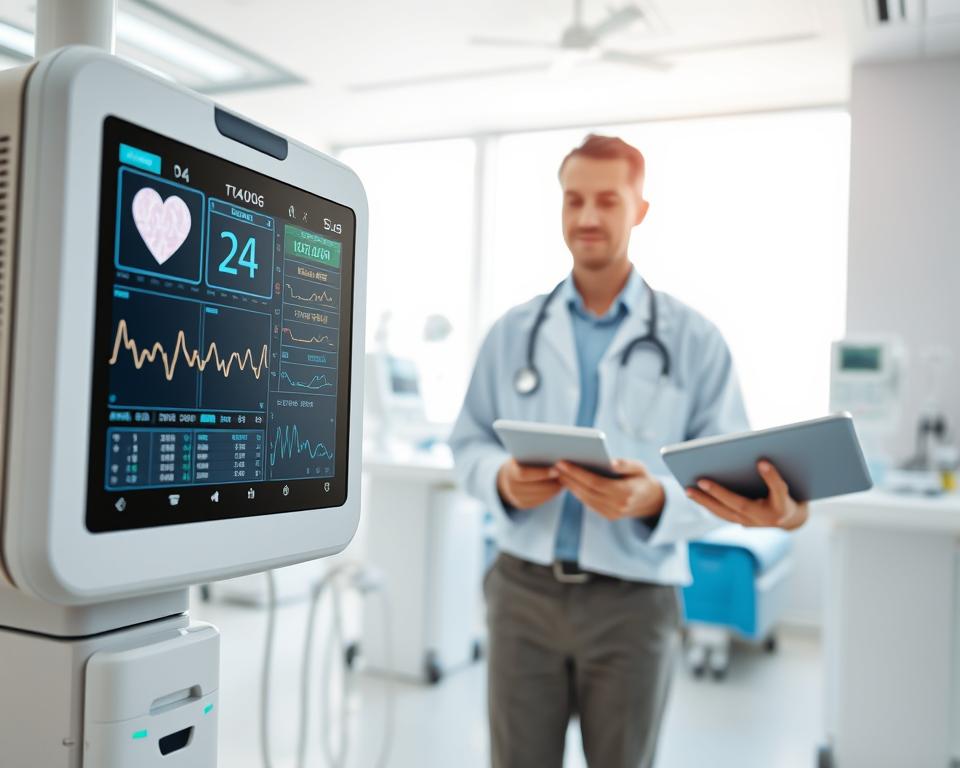
Small, frequent readings from at-home devices let clinicians see trends that single clinic checks miss. Continuous monitoring helps teams move from isolated numbers to a timeline of health.
Continuous monitoring that supports earlier intervention
Continuous monitoring captures small changes over days or weeks. Those trend lines often matter more than one-off readings.
Earlier intervention can look like a nurse calling after an upward trend, a medication review, or scheduling an in-person exam when signs worsen.
Turning symptoms and vitals into actionable decisions
When symptom reports and vital signs arrive with context and thresholds, clinicians can set rules for alerts.
Thresholds plus clinician review make data actionable. That means a lab-style flag or message prompts real follow-up.
Improving outcomes by tracking progress over time
Weekly and monthly trend tracking helps personalize plans. Clinicians adjust goals based on whether the plan actually moves the needle.
- Trend lines show improvement or decline.
- Devices designed for repeat use reduce drop-off.
- Patients who view their own data often make healthier choices.
“When people can see their trends, they understand how daily choices affect outcomes.”
Good remote patient monitoring blends reliable data capture, simple onboarding, and clear feedback so patients and providers can act sooner and with confidence.
Virtual Visits as the Starting Point for Remote Treatment Plans
A video consultation can quickly clarify a patient’s history and show movement patterns that guide the next steps. Many programs, like Airrosti Remote Recovery, begin with a video consultation and a step-by-step orthopedic evaluation to reach an accurate diagnosis.
Video evaluation and guided testing to support diagnosis
During the visit, the provider reviews history, watches guided movement tests, and asks focused questions. This step-by-step approach helps confirm a likely diagnosis and tells the team whether ongoing care can continue virtually.
What patients need for a smooth telemedicine appointment
For a quality telemedicine appointment, patients need a webcam-enabled phone or computer, stable Wi‑Fi, and a chair that lets them keep feet flat.
- Wear clothing that allows movement and shows the affected area.
- Clear space so the camera can capture full body and feet.
- Choose a private, quiet room and avoid being in a vehicle.
- Upload prior imaging or records through the patient portal when relevant.
Beklentileri belirleyin: the initial virtual visits act as the “front door” where history, symptom review, and guided testing shape the plan. If safety or complexity suggests in-person care, the provider will arrange next steps and any needed referrals.
Connected Remote Treatment Workflows That Keep Care Coordinated
A clear workflow ties an initial evaluation to scheduled check-ins, in‑app coaching, and measurable milestones.
Care coordination and referrals when at-home care isn’t the right fit
The program starts with an evaluation that creates a structured plan and milestones. If a provider finds signs that need in-person care, referrals are arranged quickly so the patient is not left waiting.
Blending scheduled check-ins with asynchronous messaging
Scheduled video visits set goals and review progress. Between visits, unlimited in-app messaging gives timely support and lets clinicians triage issues without extra visits.
Delivering exercises, education, and tools through a phone or tablet
App-delivered exercise videos and step-by-step education run on a phone or tablet so patients can follow along at home. Clear instructions reduce errors and boost adherence to the plan.
Outcome-based programs that adjust plans using real-time data
Real-time data feeds progress signals into the program dashboard. When trends plateau or flare up, providers modify the plan and update milestones.
- Structured start: evaluation → plan → milestones.
- Escalation: fast referrals to local services when needed.
- Balance: scheduled visits plus on-demand messaging protect clinician time while keeping patients supported.
“A coordinated workflow keeps care timely and keeps patients moving toward better outcomes.”
Blood Pressure Monitoring Devices for Hypertension and Risk Detection
Regular at-home readings help detect gradual pressure changes before a crisis occurs. Maternity RPM kits often include FDA-approved blood pressure cuffs that stream readings to a clinician dashboard in real time.
Bluetooth cuffs and automatic trend reporting
Bluetooth blood pressure cuffs simplify frequent readings and remove manual logging errors. A cuff pairs to an app and sends weekly averages, morning/evening patterns, and clear trend charts to the care team.
How abnormal results prompt timely outreach
Threshold-based alerts flag high or low pressure so clinicians can contact the patient quickly. That outreach may lead to a medication review, urgent evaluation, or instructions to repeat measurements.
- Measure at the same times each day and sit quietly for five minutes.
- Use the correct cuff size and keep the arm at heart level.
- Follow clinician directions on repeating readings and when to seek urgent care.
“Consistent home monitoring can spot risk trends earlier than a once‑a‑year office visit.”
Heart Monitoring Devices That Bring Cardiac Data to Clinicians
Wearable cardiac patches let clinicians observe heart rhythm over days, not minutes. These devices catch brief, intermittent events that a short clinic ECG can miss.
Wearable ECG patches for arrhythmia detection and clearer heart rhythm data
Single-lead, P-wave–focused patches such as Bardy Diagnostics’ CAM Patch sit over the sternum and can be worn up to 14 days.
The P-wave‑centric design helps record clearer rhythm signals for more accurate arrhythmia diagnosis and better compliance during daily life.
Heart rate trends that help guide next steps in care
Clinicians review heart rate trends plus symptom notes to decide whether to adjust medications, order further testing, or refer to cardiology.
Longer observation means clinicians often catch transient events that inform timely decisions and reduce unnecessary clinic visits.
- Extended-wear patches improve comfort and compliance compared with bulky monitors.
- Clearer P-wave data increases diagnostic confidence for providers.
- Patient education on what sensations to report and how to wear the patch matters for quality data.
Practical note: encourage patients to log symptoms when they feel palpitations or dizziness and to follow instructions for replacing or caring for the device.
For clinical context on ambulatory ECG use, see this summary of relevant evidence: ambulatory ECG evidence.
Temperature and Pulse Oximeter Tools for Fever and Respiratory Monitoring
A continuous view of fever and oxygen levels can reveal subtle changes before symptoms become severe.
Continuous temperature patches and app-based tracking
Continuous temperature monitoring can reveal fever patterns that single checks miss. This is useful during recovery or for people with weakened immunity.
One example is Blue Spark Technologies’ TempTraq — a soft, disposable patch that transmits readings via Bluetooth for up to 72 hours. TempTraq Connect can also push temperature data into EHRs using HL7 standards so clinicians can review it in their workflow.
App tracking and cloud services make it easier to spot trends and match them with reported symptoms. That trend view helps clinicians decide when to message a patient, adjust care, or schedule an in‑person visit.
Pulse oximeter readings that help flag worsening symptoms
Pulse oximeters complement fever monitoring by showing oxygen saturation and pulse rate. Drops in SpO2 often flag respiratory decline before breathing feels bad.
- Use proper finger placement and warm hands for accurate readings.
- Re‑check low results to reduce false alarms and confirm trends.
- Follow a clear escalation plan: message the clinician, book a visit, or seek urgent care based on severity.
Practical note: both devices help clinicians act sooner and support better health decisions when data aligns with symptoms. Clear patient guidance reduces noise and improves the value of monitoring.
Weight Scales and Activity Trackers That Support Long-Term Health
Consistent tracking of weight and activity turns vague goals into clear, data-driven steps. Simple tools make it easy for patients and clinicians to see progress and adjust plans over time.
Bluetooth-enabled scales for consistent, shareable data
Bluetooth scales remove the need for manual logs. They auto-send weight readings to a clinical dashboard so teams see uniform, timely data.
This lowers friction and reduces errors from transcribed numbers. Clinicians get weekly averages and weight trends without extra work.
Activity tracking to reinforce care plans outside the clinic
Activity trackers convert steps, active minutes, and sleep into measurable signals. Those signals help translate lifestyle advice into daily goals.
When movement is visible, patients stay motivated and clinicians can tailor advice to real behavior.
Using trends to personalize goals and improve program compliance
CoachCare, for example, pairs a Bluetooth scale and activity tracker with messaging and video in one program. Devices feed a dashboard that highlights plateaus, rapid changes, or missed check-ins.
- Clinicians adjust goals when trends show plateaus or fast shifts.
- Automated reminders and simple workflows boost adherence and program completion.
- Long-term results come from steady routines; these tools make consistency easier to measure.
Outcome focus: reliable weight and activity data improve care planning and help drive better outcomes over months, not days.
Connected Devices for Maternity and Postpartum Care
For many pregnant patients, simple home readings make prenatal care safer and more convenient. Frequent checks of weight and blood pressure help clinicians see early changes so they can act sooner.
Remote monitoring kits that include blood pressure cuffs and weight scales
Mommy Kits bundle an FDA-approved blood pressure cuff and a weight scale with app guidance. Babyscripts’ program pairs these devices with app-directed monitoring and trigger alerts when numbers fall outside set ranges.
Reducing unnecessary in-person visits while maintaining digital touchpoints
By sending routine readings from home, the program can cut prenatal visits from 12–14 to about 4–6 without losing continuous digital touchpoints. Clinicians get trends and can call or schedule visits only when needed.
Education, reminders, and bilingual engagement to support patients
Bi-directional chat, surveys, and educational content in English and Spanish boost patient engagement. Reminders and inline education help patients follow instructions and report symptoms early.
- Safety first: early detection of high pressure or weight changes prompts faster clinical outreach.
- Chat and surveys surface mental health or social risk concerns for better care coordination.
- Low-friction monitoring helps patients stay involved in their own health between visits.
Senior Safety and Independent Living With Smart Monitoring Technology
Smart sensors and simple analytics can help seniors live safely at home while protecting their privacy.
Fall detection alerts designed for privacy-sensitive environments
Privacy matters in bedrooms and bathrooms. AltumView uses a visual sensor plus AI to detect falls and sends stick-figure animations instead of raw video.
This approach keeps dignity intact while enabling fast alerts to family and emergency services.
Activity statistics that help caregivers spot changes over time
Daily activity summaries and trend charts show subtle shifts in mobility, sleep, or routine. Caregivers and health professionals can spot declines and plan early interventions.
Support for dementia-related wandering with geo-fencing features
Geo-fencing creates safe boundaries. If a person leaves a set area, the system alerts caregivers so they can check in promptly without constant supervision.
- Use in private homes, senior living, or care facilities based on needs and coverage areas.
- Cloud and app connectivity give families and professionals timely data for decisions.
- Patterns collected over years can guide safer care plans and family planning.
“Privacy-sensitive monitoring balances independence with timely support.”
How Remote Treatment Programs Deliver Tools and Guidance
Programs that pair clear instruction with the right gear make at-home recovery realistic and measurable.
Recovery kits and active care tools that help patients follow the plan
Recovery kits arrive ready to use. They include simple tool sets such as bands, foam rollers, and a Bluetooth scale or cuff when needed.
Airrosti Remote Recovery sends a Remote Recovery Kit with active care tools that reinforce daily work. That kit reduces barriers and helps patients stick to the plan.
Provider-guided at-home techniques plus mobility and stability exercises
Providers teach step-by-step exercises through app videos and short check-ins. These guided sessions show correct form and explain progression.
Mobility and stability exercises are delivered as sequenced videos. They update based on a patient’s progress and reported symptoms.
- Practical execution: kits + clear instruction make home work safe and repeatable.
- Clinical oversight: providers adjust exercise dosage, troubleshoot form, and respond to setbacks.
- Adherence equals results: consistent execution bridges diagnosis and real improvement.
“Sending the right tools with guided care turns plans into daily progress.”
Data, Dashboards, and Alerts That Help Providers Act Faster
Good dashboards turn daily measurements into clear priorities for nursing and physician teams. They collect device readings, show trends, and make it simple for providers to decide what needs a quick response.
How health data flows from a device to the clinical dashboard
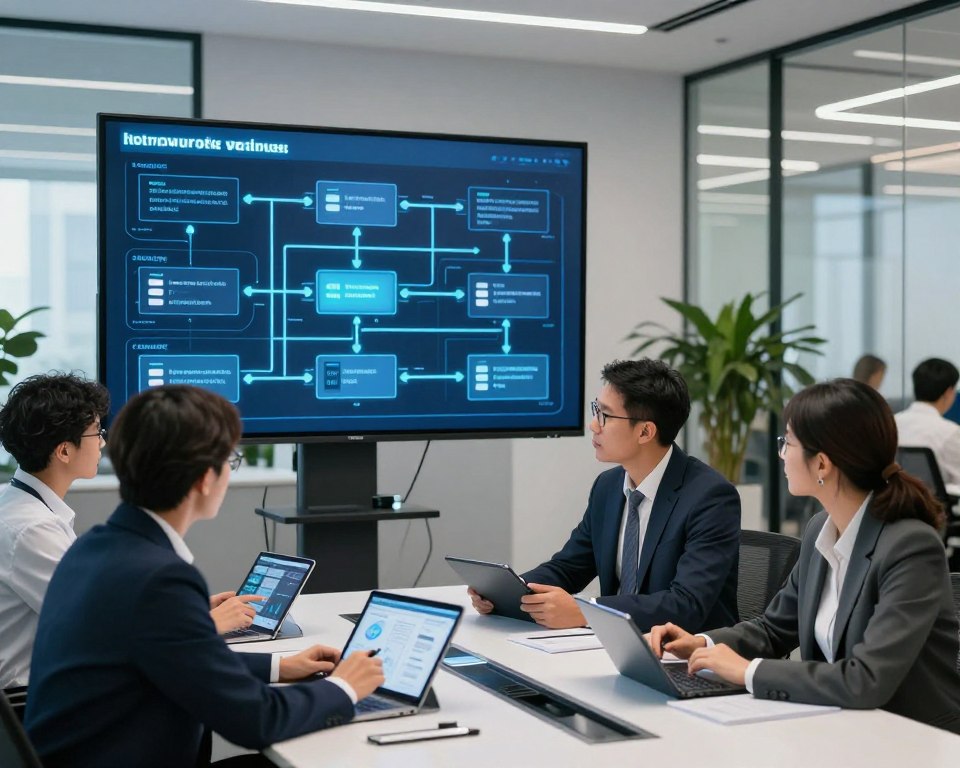
A sensor captures a vital sign, the companion app transmits the reading, and secure cloud storage keeps the record. Dashboards visualize trends so clinicians see weeks of context at a glance.
Trigger systems that highlight abnormal results in real time
Trigger rules flag outliers and urgent patterns so providers don’t have to scan every datapoint. Babyscripts-style alerts notify nursing teams when thresholds are crossed, enabling fast outreach.
Cloud platforms and integrations that scale monitoring
HL7-enabled services, like TempTraq Connect, push temperature data into EHRs and nurse workstations for seamless documentation. At scale, dashboards centralize monitoring across thousands of patients and support consistent protocols.
“A thoughtful technology solution reduces alert fatigue with thresholds, trend logic, and patient context.”
- End-to-end flow: capture → transmit → store → visualize.
- Prioritized alerts let providers triage faster.
- Integrated platforms improve follow-up, documentation, and operational efficiency of healthcare services.
Results That Matter: Measuring Outcomes, Satisfaction, and Progress
Measuring meaningful change helps teams know whether care is working and when to adapt a plan.
Patient-reported outcomes as a practical performance signal
Patient-reported outcomes—like symptom scores and function scales—give context that device readings alone cannot. Airrosti reports consistent patient-reported outcomes for Remote Recovery and uses real-time tracking to update plans as needed.
Tracking compliance to strengthen results
Compliance is a clear driver of strong results. When patients complete exercises, check-ins, and messaging goals, the program shows better functional gains and higher satisfaction.
When the data suggests changing the plan or escalating care
Clinicians use combined signals—PROs, device data, and missed tasks—to decide next steps. Typical adjustments include dose changes for exercises, extra education, or scheduling an earlier visit.
- Good results look like symptom reduction, better function, and durable progress over weeks.
- Patient-reported outcomes complement device data and make improvement measurable.
- Compliance tracking flags when extra coaching or reminders are needed.
- Escalation logic: worsening trends prompt in-person evaluation, imaging, or referral.
“Measuring outcomes is the feedback loop that keeps care personalized, safe, and effective.”
Choosing the Right Connected Remote Treatment Solution for a Practice
Selecting the right platform starts with matching clinical need to device capability and practice capacity. A practice should first map patient populations, common conditions, and the level of monitoring each group will need.
Matching devices and services to patient groups
Match devices to clinical use. For example, BP cuffs fit hypertension programs, scales and activity trackers support weight management, ECG patches help arrhythmia cases, and temperature/SpO2 tools suit respiratory monitoring.
Staff workflow and messaging coverage
Define roles: who reviews alerts, who answers messages, and the expected response time. Practices should set after‑hours rules and clearly note when escalation is required.
Visit cadence and expectation setting
Plan visit frequency so providers protect time while keeping meaningful follow-up. Use scheduled check-ins plus app messaging for interim touchpoints.
Onboarding and support must be clear: teach device setup, offer quick troubleshooting, and tell patients what to do if data fails to sync.
“The best services combine an app, dashboard, devices, and clear referral pathways so care stays safe and coordinated.”
- Scale: CoachCare shows how an app + dashboard + devices + messaging/video scales across practices.
- Structured check-ins: Airrosti pairs scheduled video reviews and unlimited messaging with fast referral paths when in‑person care is needed.
- Safety: require clear escalation rules and referral options to keep care coordinated.
Privacy, Safety, and Practical Setup for Connected Care at Home
Good preparation makes telehealth and telemedicine visits private, safe, and reliable. A little planning reduces tech glitches and helps patients focus on their health during a visit.
Creating a private space and protecting health data
Choose a quiet room with a closed door and few interruptions. That privacy makes it easier to discuss personal health matters.
Protect sensitive data by using device passcodes, keeping software up to date, and logging out of shared devices after a session.
Use secure Wi‑Fi or a trusted hotspot. Public networks increase the risk of intercepted data and should be avoided for telemedicine visits.
Basic tech requirements for reliable video visits and device syncing
Patients should use a webcam-enabled smartphone, tablet, or computer and keep their device charged.
Stable internet—preferably Wi‑Fi—improves video and audio. Supported browsers include Safari, Chrome, and Firefox on current operating systems.
Leave enough open floor space and a chair so the provider can observe movement safely during an exam.
- Quiet, private room with a closed door.
- Webcam-enabled phone or computer and charged battery.
- Stable Wi‑Fi or reliable internet connection.
- Modern browser (Safari/Chrome/Firefox) or updated mobile OS.
- Clear space and a sturdy chair for movement-based checks.
“When technology works smoothly, patients gain better access and are more likely to stick with telehealth and telemedicine care.”
Safety note: never hold a telemedicine visit while driving or riding in a vehicle. Good setup equals better access and fewer missed appointments.
Çözüm
When devices, data streams, and clinical workflows work in sync, patients gain clearer, timelier support.
At-home devices, dashboards, and scheduled virtual check-ins combine to give clinicians better visibility into a person’s health between visits. That visibility helps teams spot changes sooner and tailor plans to each patient.
Good monitoring works best with clear thresholds, active clinician oversight, and simple patient education. These elements reduce false alarms and make follow-up more practical.
Many issues can be managed at home, but built-in escalation paths keep care safe when in-person evaluation is needed. Practices and patients should evaluate which devices and programs match their goals to improve results and outcomes.
Next step: review device options and workflow needs so care becomes more coordinated, private, and accessible for everyone.