Anúncios
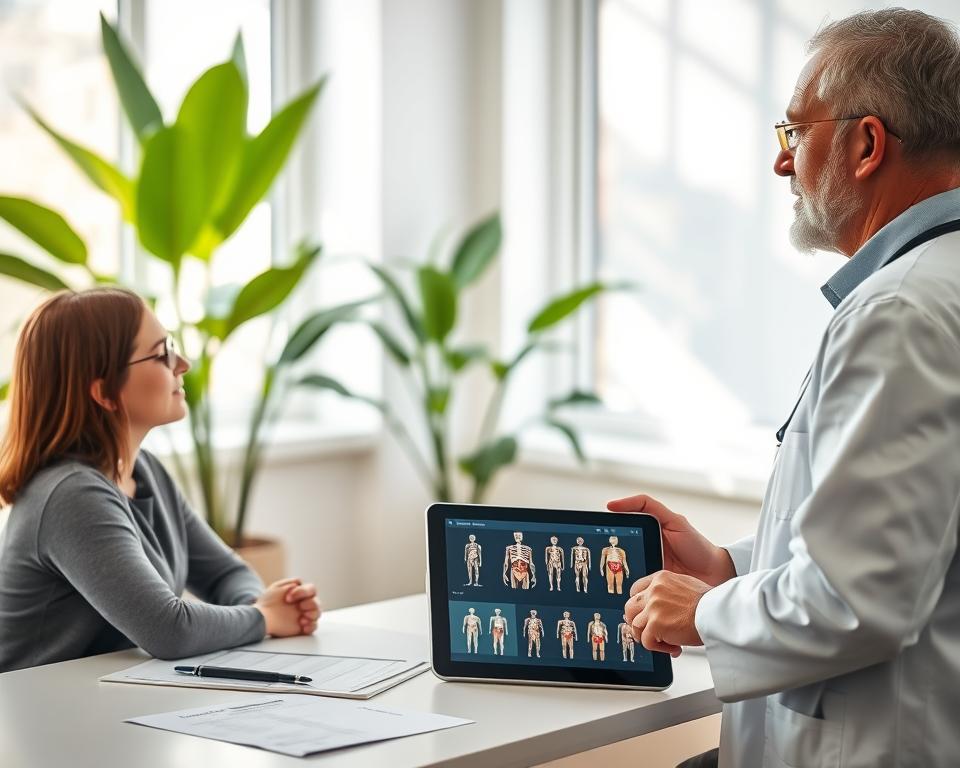
Have you ever chosen a doctor because they made you feel understood rather than just well treated?
Empathy is the bridge that helps you set aside your own thoughts and step into a patient’s world.
When you truly grasp someone’s feelings and experience, you build trust fast. Patients often weigh that trust as heavily as a clinician’s training.
Understanding comes before action: you first listen to feelings, then deliver care that fits what people value.
That simple shift changes how patients share details, follow plans, and remember your clinic. Small, clear moments—tone, eye contact, chosen words—add up and shape outcomes.
Anúncios
Use this guide to make every conversation count so your care feels human-centered from the first minute.
Why empathy is essential to patient care and outcomes
When you feel truly heard in a clinic, the rest of care often falls into place. That first act of listening is not a soft skill — it’s a clinical tool that shapes trust, adherence, and measurable results.
Empathy versus compassion: understanding the difference and sequence
Empathy means noticing and understanding a person’s emotions. Compassion follows as the action you take after that understanding.
Anúncios
How empathy builds trust, adherence, and better health outcomes
When you show understanding, patients disclose details that matter for diagnosis. Studies show that listening improves treatment compliance and leads to better health outcomes.
- Trust improves when you reflect feelings and summarize concerns.
- Patients who feel heard follow plans and practice self-care more reliably.
- Fewer misunderstandings mean better continuity of care and fewer disputes.
Reducing disputes and improving patient satisfaction and experience scores
Empathic behaviors raise patient satisfaction and can boost experience scores that affect reimbursement. Make small moves—ask if you understood correctly and close with clear next steps—to keep quality high.
Best practices you can use today for empathetic health communication
A few focused skills will help you turn routine visits into meaningful encounters. Use these steps to improve how you listen, respond, and guide patients. Each is practical and repeatable in busy settings.
Active listening
Give your full attention: pause, face the patient, and avoid interruptions. Reflect back a key point so the person knows you heard them.
Validate emotions
Use plain phrases like “I can see this is really difficult” to acknowledge feelings. Validation helps patients share details that change your care plan.
Be present and patient
When time is tight, slow your pace and lower your voice. Summarize next steps so the process feels predictable and steady.
Be curious
Ask open-ended questions: “What worries you most today?” These prompts surface concerns and priorities that matter to people.
Offer reassurance and adapt
Say clearly, “We’re here to help you through this.” Match words to the person’s age and culture and avoid jargon.
Lead with kindness and choose the right approach
Balance warmth with professional boundaries. Use empathy when connection helps; use detached concern when distance keeps care effective.
For evidence on outcomes tied to these practices, see this review on patient-centered skills: patient-centered skills review.
Building an empathetic care culture: from leadership to processes
Culture starts where leaders show what matters each day. You set expectations by hiring for empathy, setting onboarding goals, and recognizing staff who make care feel human.
Modeling from the top means hiring people who match your values and onboarding them to clear behavioral standards. Reward daily actions so empathy becomes part of routine work.

Training and coaching to sustain skills
Invest in training that is evidence-based. Helen Riess, MD’s work at Massachusetts General Hospital shows emotional awareness and self-management can boost performance.
Pair that training with regular coaching, observations, and feedback. One-off workshops fade; coaching preserves gains and improves long-term effectiveness.
Measure, design, and tweak
Use patient experience metrics and qualitative feedback to guide development. Studies show empathy can decline after training, so measurement matters.
- Co-design with patients and family advisors to map journeys and fix touchpoints.
- Add simple process items—“family updated” checks and respectful intake questions—to make care more reliable.
- Create templates and workflows so teams can do the right thing without extra effort.
Empathetic health communication in telemedicine and in-person settings
You can deliver the same level of care over a screen when you frame the visit intentionally. A small pilot at Emory compared in-person and telemedicine encounters in primary care and found patient perceptions of clinician empathy were similar.
What studies suggest
The 2022 cross-sectional study enrolled eight clinicians (family/internal medicine physicians and one physician assistant) and 34 patients. Clinicians averaged about 118 on the Jefferson Scale of Empathy while patients scored perceived empathy in the low 30s (33.8 telemedicine vs 31.3 in-person; P=.31).
Scores for culturally sensitive communication varied, while discrimination scores stayed low. The authors noted limits—small sample, cross-sectional design, and response bias—so further research is needed.
Practical telehealth tips
Frame the visit: confirm audio, look into the camera to simulate eye contact, and invite concerns early—“What worries you most today?”
Narrate your actions, pause often, and check understanding. Offer tech help or privacy options when patients need it. Small program changes like pre-visit tech checks and post-visit summaries support follow-through.
Benchmark and coach: keep Jefferson scale levels in mind and use brief coaching after sessions to refine skills. For more on patient-centered outcomes, see the pilot study.
Conclusion
Conclusion
When teams prioritize small, human acts, the system itself starts to work better for people. Make empathy the practical heart of your care by naming the needs you hear and matching your approach to each situation.
Use time as an ally: spend a few focused minutes to check understanding and address concerns. Those minutes reduce confusion and raise patient satisfaction.
Build skills with steady practice—brief reflections, kind phrasing, and clear summaries—and make empathy everyone’s role, from front desk to clinician.
Support that lasts—follow-up calls, clear instructions, and timely resources—keeps patients guided between visits and improves health outcomes over time.